
Ziyi Chang
About Me
I am a Postdoctoral Researcher at Inria Rennes and an incoming Bienvenüe+ MSCA-COFUND Fellow. My research develops computational models for socially intelligent virtual humans, embodied agents, and dense crowds, with a focus on multi-character interaction, crowd dynamics, generative motion modelling, and human-centred AI.
From November 2026, I will lead GROWD (Generative Modelling of Dense Crowds under Multiscale Observations), a 24-month Bienvenüe+ MSCA-COFUND Fellowship project hosted by the VirtUs team at Inria Rennes. The project extends my previous work in multi-character interaction synthesis and generative human motion toward probabilistic, data-informed modelling of dense crowd dynamics.
For Prospective Collaboration
I welcome collaborations on dense crowd modelling, generative models for crowd dynamics, multiscale motion observation, character animation, human-robot interaction, public-space safety, and trustworthy embodied AI.
Research Interests
- Research Vision: Data-informed and trustworthy generative models for virtual humans, embodied agents, and dense crowds
- Core Themes: Dense crowd dynamics, multi-character interaction, crowd-aware behaviour, trustworthy motion intelligence, human-robot and human-agent interaction
- Methods: Generative and diffusion models, multiscale representation learning, probabilistic modelling, adversarial robustness, physics-based and data-driven animation
News
- [July 2026] I have been selected as an incoming Bienvenüe+ MSCA-COFUND Fellow for GROWD, a 24-month independent research programme on generative modelling of dense crowds under multiscale observations at Inria Rennes.
- [May 2026] Our paper about adversarial attack on human motions is accepted by IEEE TCSVT.
- [Mar. 2026] I joined Virtus team led by Julien Pettre at Inria Rennes as a postdoctoral researcher.
- [Feb. 2026] Our paper about human-robot interaction is accepted by IEEE ICHMS 2026.
- [Feb. 2026] Our paper about physics-based two-character interaction is accepted by Eurographics 2026.
- [Sept. 2025] I've successfully passed PhD viva
- [Aug. 2025] Our paper about two-character interaction in-between is accepted by SIGGRAPH Asia 2025.
- [July 2025] Our paper about reactive motion synthesis is accepted by Computer Graphics Forum.
- [June 2025] Our survey paper about diffusion models is accepted by Pattern Recognition.
- [May 2025] I work as a part-time Research Assistant in Human-Robot Interaction Project, collaborating with researchers from Durham University and the Singapore Management University.
- [May 2025] Our paper about multi-character interaction generation is accepted by SIGGRAPH 2025.
- [Oct. 2024] I am involved in the teaching of Data Science as Demonstrator.
- [Oct. 2023] I am involved in the teaching of Data Analytics in Action and Learning from Data as Demonstrator.
- [July 2023] Our paper about adversarial attack against human action recognition is accepted by ICCV 2023.
- [Apr. 2023] I start to co-supervise a PhD student with Prof. Hubert P. H. Shum.
- [Dec. 2022] Our paper about stylized motion generation with diffusion models is accepted by GRAPP 2023.
- [Oct. 2022] Our paper about stylized 3D shape generation by transferring learning is accepted by VRST 2022.
- [Oct. 2022] I am involved in the teaching of Programming (Gold), Data Science, and Computational Thinking as Demonstrator.
- [Sept. 2022] Our paper about stylized locomotion synthesis is accepted by MIG 2022.
- [Aug. 2022] I work as Supporting Chair of the 21st ACM SIGGRAPH / Eurographics Symposium on Computer Animation (SCA 2022).
- [Jan. 2022] I am involved in the teaching of Programming for Data Science as Demonstrator.
More News...
Research Vision
My long-term research vision is to build trustworthy, controllable, and interpretable human motion intelligence: data-informed models of virtual humans, embodied agents, and dense crowds that can explain, generate, and reason about interaction in shared environments.
Research Vision Space
Drag to rotate · Scroll to zoom · Hover for axis highlights · Spheres are publications · Cubes are projects
My research studies human motion intelligence across Realism, Scale, and Reasoning, framed by trustworthy, controllable, and interpretable deployment.
From Kinematics to Physics and Embodiment
I study human motion at multiple levels of realism, from kinematic motion synthesis to physics-aware interaction and embodied agents. This connects visually plausible animation with contact-rich interaction, physical constraints, and agents that can act within shared environments.
From Individuals to Interactions and Crowds
My work expands motion modelling from individual characters to dense interaction and crowd-level behaviour. I am interested in how local motion, pairwise or group interaction, and large-scale collective patterns can be represented within a coherent modelling framework.
From Generation to Understanding and Intervention
I view generative modelling as one part of a broader reasoning pipeline. The goal is not only to synthesize plausible motion, but also to understand interaction patterns and support intervention, planning, or analysis in dynamic human-centred environments.
Trustworthy, Controllable, and Interpretable Deployment
Across these axes, I aim to make motion intelligence robust, controllable, and interpretable. Building on my work on adversarial attacks and trustworthy AI, I study how motion models behave under perturbations, ambiguous observations, and safety-critical deployment conditions.
Research Publications - All
Full Publications
-
 IEEE TCSVT
IEEE Transactions on Circuits and Systems for Video Technology (TCSVT), 2026.
-
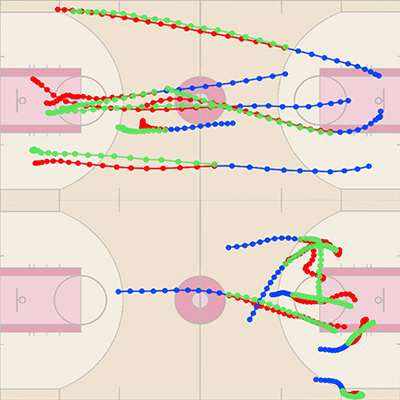 ICHMS
IEEE International Conference on Human-Machine Systems (ICHMS), 2026.
-
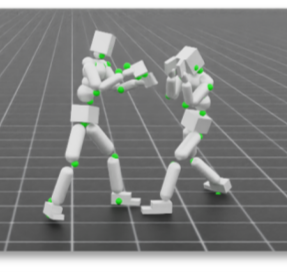 Eurographics
Annual Conference of European Association for Computer Graphics (Eurographics), 2026.
-
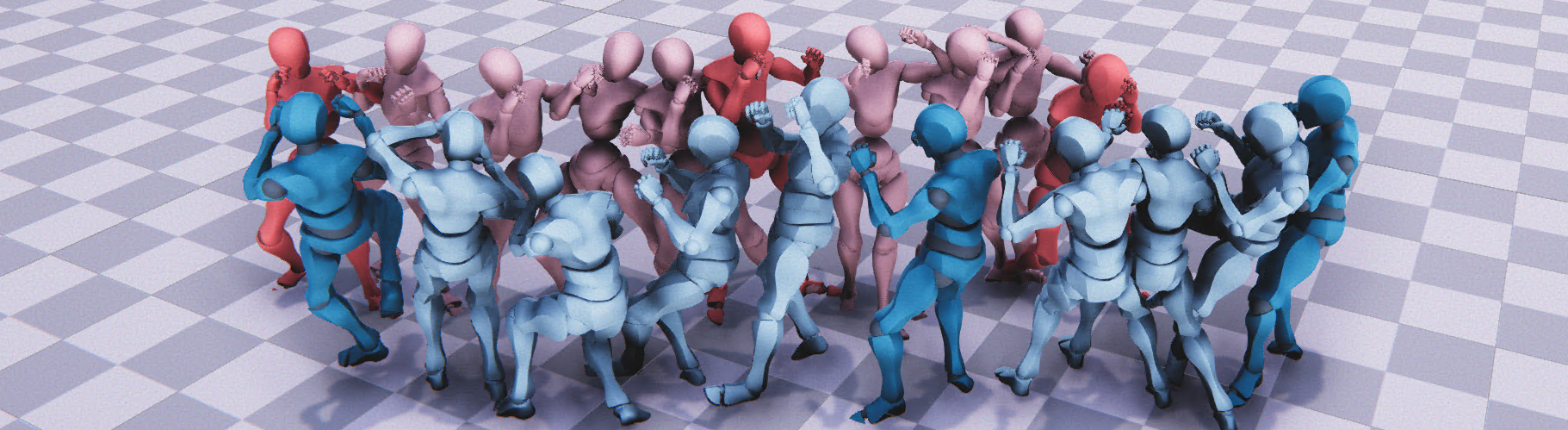 SIGGRAPH Asia
ACM SIGGRAPH Conference and Exhibition on Computer Graphics and Interactive Techniques in Asia (SIGGRAPH Asia), 2025.
-
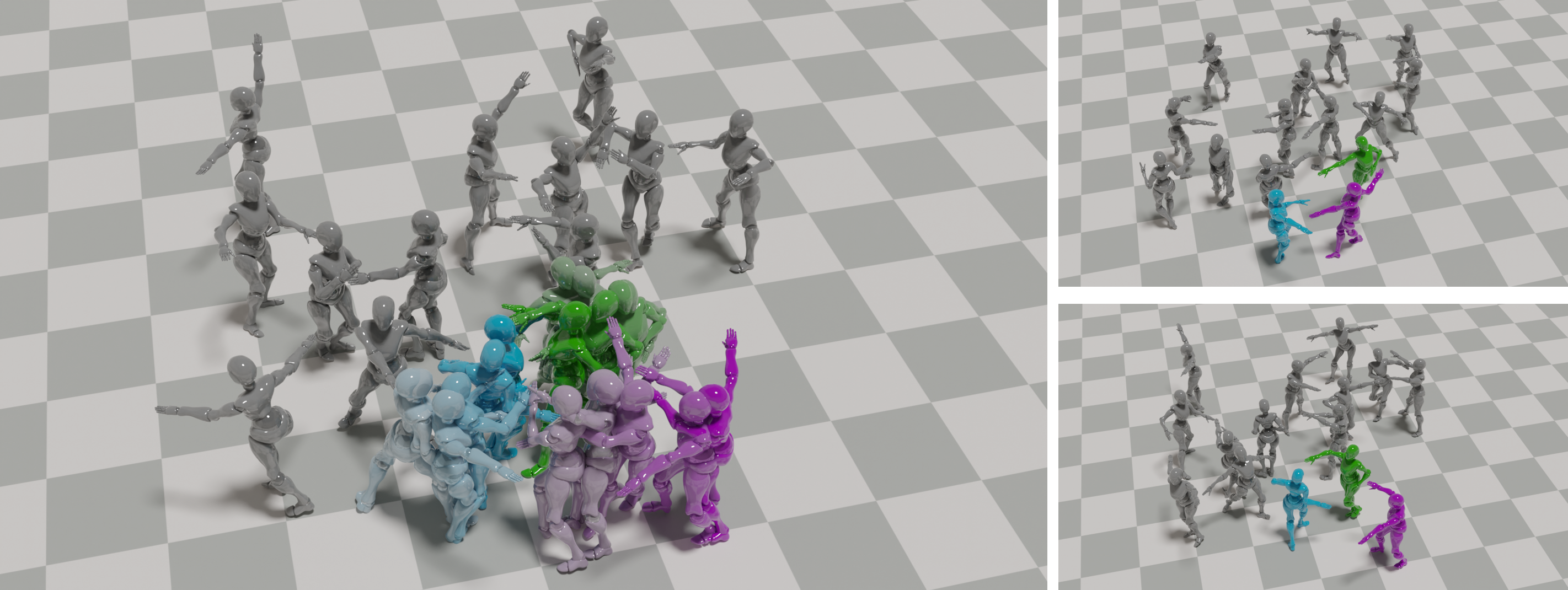 SIGGRAPH
Special Interest Group on Computer Graphics and Interactive Techniques Conference (SIGGRAPH), 2025.
-
 Pattern Recognition
 (PR), 2025.
-
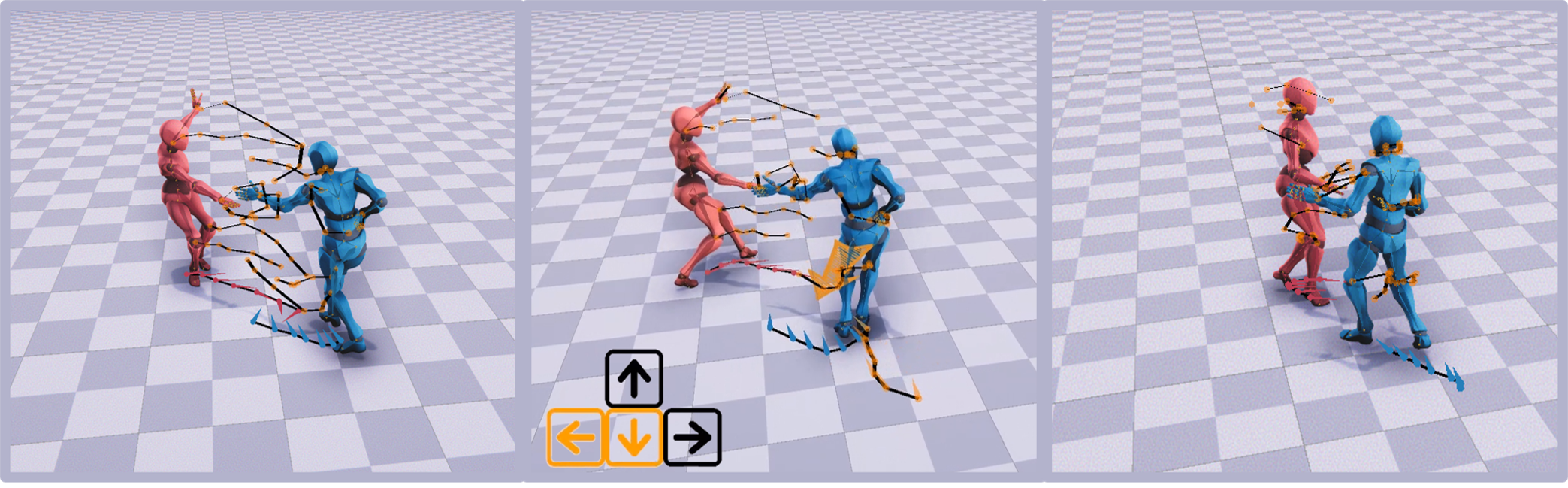 CGF
Computer Graphics Forum (CGF), 2025.
-
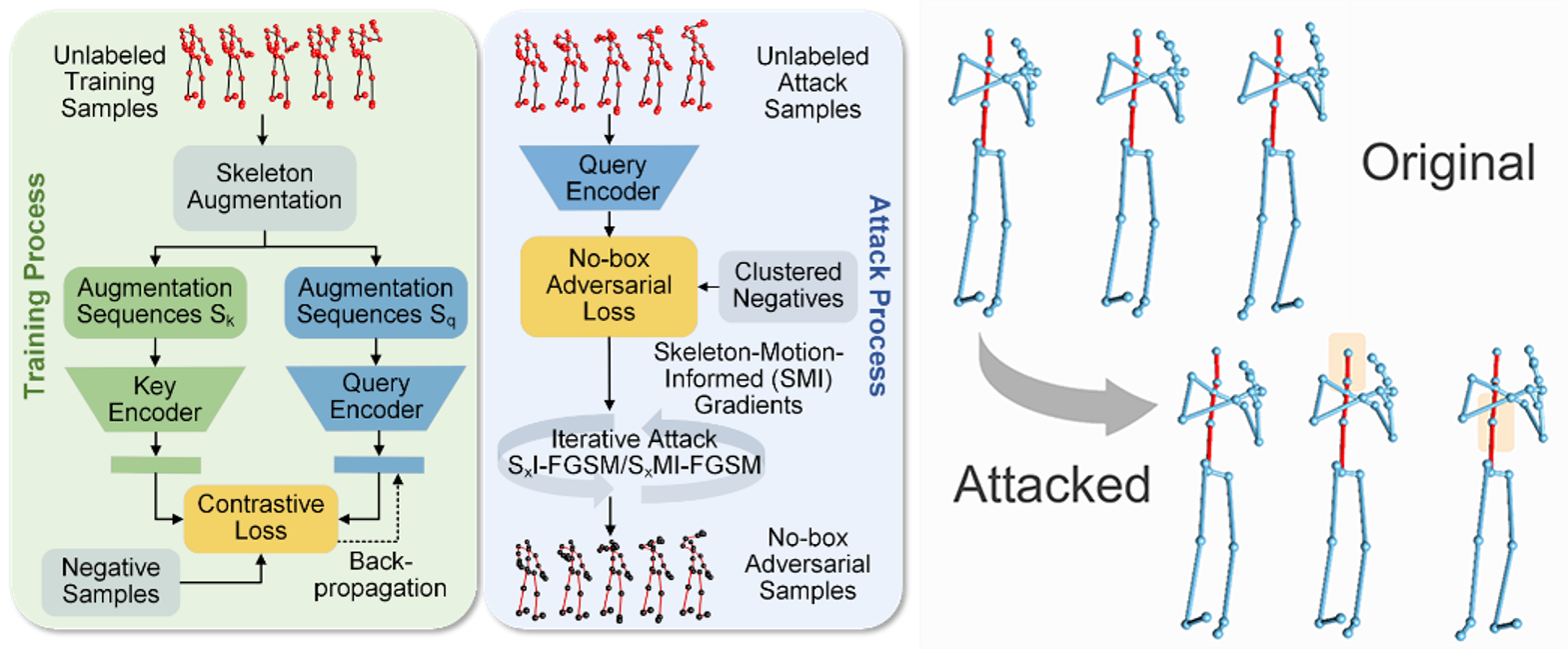 ICCV
IEEE/CVF International Conference on Computer Vision (ICCV), 2023.
-
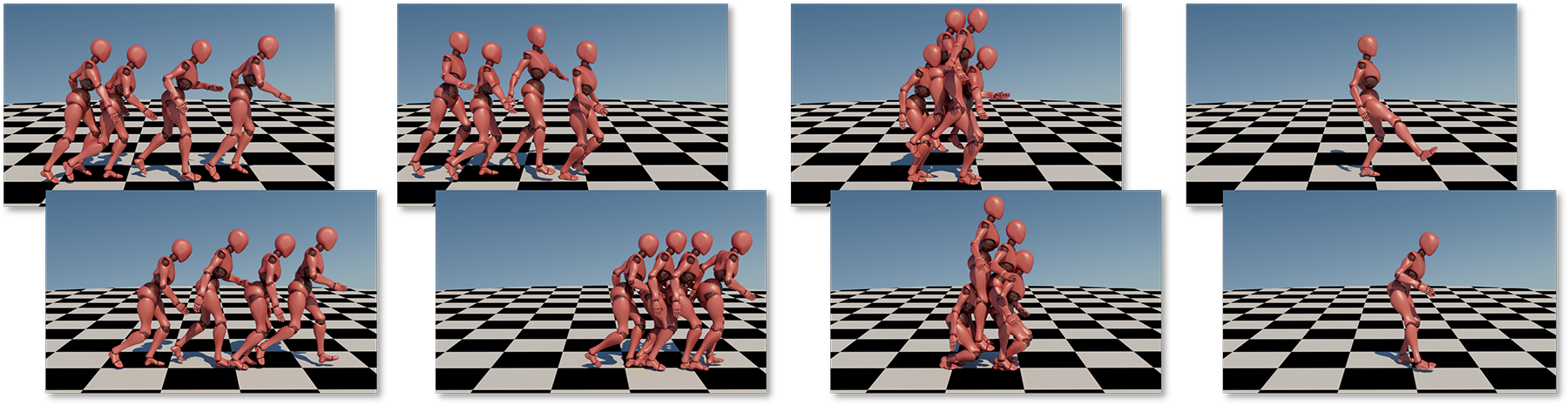 GRAPP
International Conference on Computer Graphics Theory and Applications (GRAPP), 2023.
-
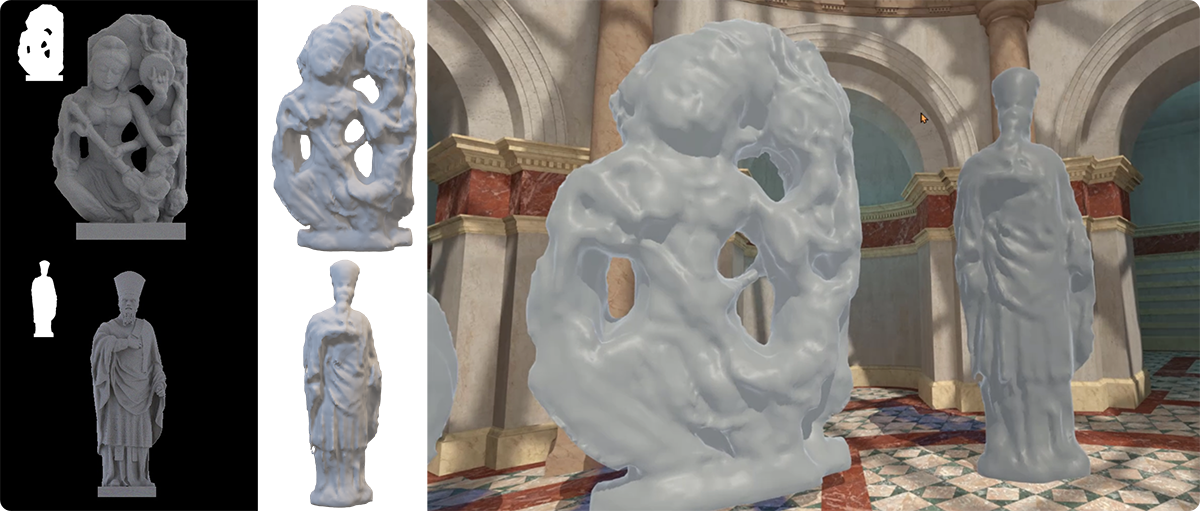 VRST
ACM Symposium on Virtual Reality Software and Technology (VRST), 2022.
-
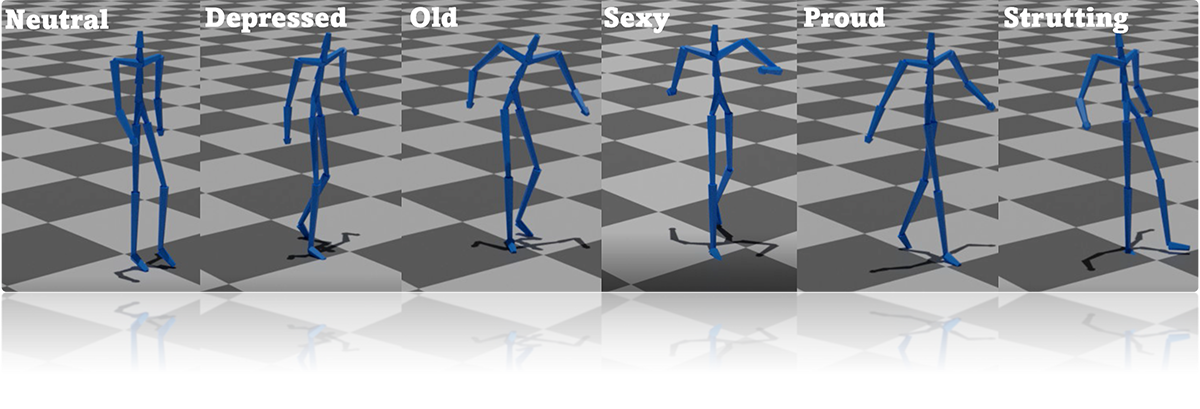 MIG
ACM SIGGRAPH Conference on Motion, Interaction and Games (MIG) Posters, 2022.
Grants & Funding
GROWD: Generative Modelling of Dense Crowds under Multiscale Observations
Bienvenüe+ MSCA-COFUND Fellowship supporting a 24-month independent research programme that I proposed and developed, hosted by the VirtUs team at Inria Rennes.
- Funder: Région Bretagne (Bienvenüe+ MSCA-COFUND)
- Period: Nov 2026 – Oct 2028
- Total funding: €131,760
- Role: Project Lead / Research Fellow
Cross-Institutional Research Capacity Development in Human-Robot Interaction
SMU-Durham project on research capacity development in human-robot interaction.
- Funding Source: Singapore Management University / Durham University, Singapore / UK
- Period: 2025 – 2026
- Reference Number: 3787041; Value: £15,000
- Role: Research Assistant / Project Contributor
Supervision & Teaching
My teaching focuses on making computational thinking, AI, and graphics concepts accessible through hands-on experimentation, research-led learning, and supportive project guidance.
PhD Co-Supervision
Co-supervising a PhD student with Prof. Hubert P. H. Shum at Durham University on interactive motion modelling and character animation.
- Providing research guidance on problem formulation, experimental design, paper writing, and revision.
- Co-supervised work has led to accepted papers at Eurographics 2026 and SIGGRAPH Asia 2025, including Physics-Based Motion Tracking of Contact-Rich Interacting Characters and Motion In-Betweening for Densely Interacting Characters.
- This supervision experience directly informs my broader research agenda on multi-character interaction and socially intelligent embodied agents.
Final Year Project Supervision
Co-supervised undergraduate student Edmund with Prof. Hubert P. H. Shum on stylized human motion generation.
- The project explored denoising diffusion probabilistic models for stylized human walking synthesis; I supported the project direction, experiment design, and paper development.
- The project led to the paper Denoising Diffusion Probabilistic Models for Styled Walking Synthesis.
- The work connects undergraduate research supervision with my broader interests in generative human motion and character animation.
University Teaching
Delivered practical and workshop sessions for undergraduate and postgraduate modules at Durham University.
- Worked in teaching teams with lecturers, reporting to Dr Barnaby Martin.
- Teaching areas include programming, data science, computational thinking, data analytics, and machine learning.
- Supported mixed-background cohorts through hands-on sessions, debugging support, assessment preparation, and project guidance.
Talks & Service
Conference Organisation
Supporting Chair of the 21st ACM SIGGRAPH / Eurographics Symposium on Computer Animation (SCA 2022).

- Led a 7-person support team.
- Coordinated with conference chairs, industrial partners, academic participants, business contacts, and service suppliers.
Outreach and Public Engagement
Co-designed and delivered robotics and AI workshops for children at Bullion Hall, UK.
- Promoted inclusive participation in STEM, with particular attention to encouraging girls to explore robotics and AI.
- Delivered accessible AI education sessions for older adults, focusing on practical understanding and trust in everyday AI technologies.
Invited Talks and Seminars
Coming soon.
Powered by Jekyll and Minimal Light theme.